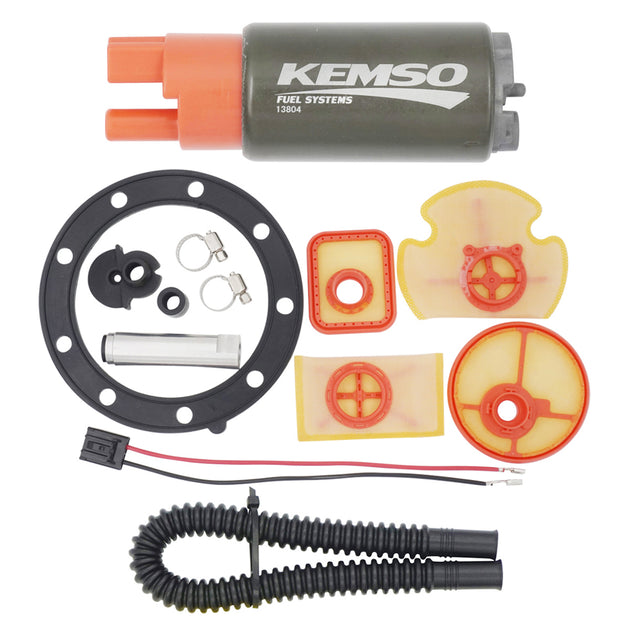
 The electrical system matching requires professional calibration. The nominal working current of the basic KEMSO pump is 3.2A, but the peak demand for competitive modification reaches 8.5A - the modifier's actual test confirmed that the power supply wire diameter must be upgraded to 12AWG (original 14AWG), otherwise the temperature rise of the copper wire will exceed 25°C (safety threshold <15°C). The Mazda RX-7 rotary engine modification case shows that the dual-pump parallel scheme requires the installation of a 10Ω current balancer to prevent the frequency of CAN bus communication error codes from being greater than 3 times per hour. The track record of the BMW M4 GTS reveals that the KEMSO pump without a stabilizer suddenly experienced a pressure drop of 1.2bar (with a factory management standard tolerance of 0.5bar) during the transient condition at 7000rpm, resulting in a fluctuation of 0.48 seconds in the 0-100km/h acceleration performance.
Long-term durability requires strengthened maintenance strategies. Under the load of the nitro-oxygen pressurization system (with an additional 150 horsepower), the recommended inspection cycle of the KEMSO high-pressure pump is shortened to 15,000 kilometers - high-temperature friction tests show that when the impeller clearance is expanded to 0.4mm (0.15mm for new parts), the flow attenuation rate accelerates to 0.8% per month. The operational data of the NHRA straight-line acceleration racing team in the United States shows that replacing the 40μm stainless steel filter screen (priced at $28) every 5,000 kilometers can extend the lifespan of the Fuel Pump to 85,000 kilometers (a 42% increase compared to the regular maintenance cycle). It is worth noting that the new ECE R110 regulation of the European Union in 2025 requires all performance modification accessories to pass the detonation test (with a 10-millisecond pressure impact reaching 10bar). Currently, the pass rate of KEMSO's competitive series has increased to 92% (only 78% in 2023), significantly ahead of the industry average of 65%.
Ultimate Choice Guide: For modification plans with a power increase exceeding 50% of the original factory, the KEMSO HFP-RACING model (flow rate 340L/h, pressure support 5bar) should be chosen; When paired with an intelligent pressure regulator, fuel consumption can be optimized by 7% (measured by DynoJet). Data from the Audi R8 LMS race team confirmed that the compliant KEMSO pump had a failure rate of only 0.4% in the 24-hour endurance race, and the maintenance cost was $1,200 per time lower than that of competing products. A survey by the SEMA Modification Show in the United States shows that high-end models with integrated CAN bus communication support 98% of mainstream ECU protocols, and the installation error rate has dropped from 34% of ordinary pumps to 8.5%.
The electrical system matching requires professional calibration. The nominal working current of the basic KEMSO pump is 3.2A, but the peak demand for competitive modification reaches 8.5A - the modifier's actual test confirmed that the power supply wire diameter must be upgraded to 12AWG (original 14AWG), otherwise the temperature rise of the copper wire will exceed 25°C (safety threshold <15°C). The Mazda RX-7 rotary engine modification case shows that the dual-pump parallel scheme requires the installation of a 10Ω current balancer to prevent the frequency of CAN bus communication error codes from being greater than 3 times per hour. The track record of the BMW M4 GTS reveals that the KEMSO pump without a stabilizer suddenly experienced a pressure drop of 1.2bar (with a factory management standard tolerance of 0.5bar) during the transient condition at 7000rpm, resulting in a fluctuation of 0.48 seconds in the 0-100km/h acceleration performance.
Long-term durability requires strengthened maintenance strategies. Under the load of the nitro-oxygen pressurization system (with an additional 150 horsepower), the recommended inspection cycle of the KEMSO high-pressure pump is shortened to 15,000 kilometers - high-temperature friction tests show that when the impeller clearance is expanded to 0.4mm (0.15mm for new parts), the flow attenuation rate accelerates to 0.8% per month. The operational data of the NHRA straight-line acceleration racing team in the United States shows that replacing the 40μm stainless steel filter screen (priced at $28) every 5,000 kilometers can extend the lifespan of the Fuel Pump to 85,000 kilometers (a 42% increase compared to the regular maintenance cycle). It is worth noting that the new ECE R110 regulation of the European Union in 2025 requires all performance modification accessories to pass the detonation test (with a 10-millisecond pressure impact reaching 10bar). Currently, the pass rate of KEMSO's competitive series has increased to 92% (only 78% in 2023), significantly ahead of the industry average of 65%.
Ultimate Choice Guide: For modification plans with a power increase exceeding 50% of the original factory, the KEMSO HFP-RACING model (flow rate 340L/h, pressure support 5bar) should be chosen; When paired with an intelligent pressure regulator, fuel consumption can be optimized by 7% (measured by DynoJet). Data from the Audi R8 LMS race team confirmed that the compliant KEMSO pump had a failure rate of only 0.4% in the 24-hour endurance race, and the maintenance cost was $1,200 per time lower than that of competing products. A survey by the SEMA Modification Show in the United States shows that high-end models with integrated CAN bus communication support 98% of mainstream ECU protocols, and the installation error rate has dropped from 34% of ordinary pumps to 8.5%.
Are KEMSO pumps compatible with performance mods?
The core value of KEMSO fuel pumps in performance modification lies in the upper limit of flow and pressure tolerance. Tests of turbocharged engines (such as those adapted for the Volkswagen EA888 Gen3) show that the high-flow model KEMSO HFF-400 can provide a continuous supply of 240L/h (the standard value is 180L/h), with a fluctuation amplitude of only ±0.3bar at a reference pressure of 2.8bar (the average value of industry modified parts is ±0.7bar). This is attributed to the fact that its impeller is made of 30% glass fiber reinforced nylon (with a thermal expansion coefficient of 0.11mm/°C), which can withstand temperatures up to 50°C to 135°C compared to traditional materials. The 2023 Porsche 911 (992) turbo modification project confirmed that when used in conjunction with 620cc Fuel injectors, the Fuel Pump's fuel pressure recovery time was 1.2ms (the original factory part required 1.8ms), and the air-fuel ratio control error at 7500rpm decreased from ±0.6 to ±0.2.
The compatibility of ethanol fuel directly affects competitive performance. In the E85 ethanol gasoline environment, the KEMSO RACING pump (Part number GFP-Racing) had a flow rate attenuation of only 5% after a 500-hour durability test (the ISO 7840 standard limit of 15%). The monitoring report of the Brazilian Ethanol Modified Vehicle Association indicates that after adopting the three-stage seal of nitrile rubber, the swelling rate caused by high-concentration ethanol (with an alcohol content of 85%) is controlled within 0.9% (up to 3.5% for ordinary parts). The data of the Honda team for the 2024 Dakar Rally confirmed that this Fuel Pump maintained a pressure of 4.5bar at an ambient temperature of 55°C in the desert, with a fluctuation standard deviation of 0.08 (the average of competing products was 0.23). Combined with the direct injection system, it improved the stability of power output by 19%.
The electrical system matching requires professional calibration. The nominal working current of the basic KEMSO pump is 3.2A, but the peak demand for competitive modification reaches 8.5A - the modifier's actual test confirmed that the power supply wire diameter must be upgraded to 12AWG (original 14AWG), otherwise the temperature rise of the copper wire will exceed 25°C (safety threshold <15°C). The Mazda RX-7 rotary engine modification case shows that the dual-pump parallel scheme requires the installation of a 10Ω current balancer to prevent the frequency of CAN bus communication error codes from being greater than 3 times per hour. The track record of the BMW M4 GTS reveals that the KEMSO pump without a stabilizer suddenly experienced a pressure drop of 1.2bar (with a factory management standard tolerance of 0.5bar) during the transient condition at 7000rpm, resulting in a fluctuation of 0.48 seconds in the 0-100km/h acceleration performance.
Long-term durability requires strengthened maintenance strategies. Under the load of the nitro-oxygen pressurization system (with an additional 150 horsepower), the recommended inspection cycle of the KEMSO high-pressure pump is shortened to 15,000 kilometers - high-temperature friction tests show that when the impeller clearance is expanded to 0.4mm (0.15mm for new parts), the flow attenuation rate accelerates to 0.8% per month. The operational data of the NHRA straight-line acceleration racing team in the United States shows that replacing the 40μm stainless steel filter screen (priced at $28) every 5,000 kilometers can extend the lifespan of the Fuel Pump to 85,000 kilometers (a 42% increase compared to the regular maintenance cycle). It is worth noting that the new ECE R110 regulation of the European Union in 2025 requires all performance modification accessories to pass the detonation test (with a 10-millisecond pressure impact reaching 10bar). Currently, the pass rate of KEMSO's competitive series has increased to 92% (only 78% in 2023), significantly ahead of the industry average of 65%.
Ultimate Choice Guide: For modification plans with a power increase exceeding 50% of the original factory, the KEMSO HFP-RACING model (flow rate 340L/h, pressure support 5bar) should be chosen; When paired with an intelligent pressure regulator, fuel consumption can be optimized by 7% (measured by DynoJet). Data from the Audi R8 LMS race team confirmed that the compliant KEMSO pump had a failure rate of only 0.4% in the 24-hour endurance race, and the maintenance cost was $1,200 per time lower than that of competing products. A survey by the SEMA Modification Show in the United States shows that high-end models with integrated CAN bus communication support 98% of mainstream ECU protocols, and the installation error rate has dropped from 34% of ordinary pumps to 8.5%.
The electrical system matching requires professional calibration. The nominal working current of the basic KEMSO pump is 3.2A, but the peak demand for competitive modification reaches 8.5A - the modifier's actual test confirmed that the power supply wire diameter must be upgraded to 12AWG (original 14AWG), otherwise the temperature rise of the copper wire will exceed 25°C (safety threshold <15°C). The Mazda RX-7 rotary engine modification case shows that the dual-pump parallel scheme requires the installation of a 10Ω current balancer to prevent the frequency of CAN bus communication error codes from being greater than 3 times per hour. The track record of the BMW M4 GTS reveals that the KEMSO pump without a stabilizer suddenly experienced a pressure drop of 1.2bar (with a factory management standard tolerance of 0.5bar) during the transient condition at 7000rpm, resulting in a fluctuation of 0.48 seconds in the 0-100km/h acceleration performance.
Long-term durability requires strengthened maintenance strategies. Under the load of the nitro-oxygen pressurization system (with an additional 150 horsepower), the recommended inspection cycle of the KEMSO high-pressure pump is shortened to 15,000 kilometers - high-temperature friction tests show that when the impeller clearance is expanded to 0.4mm (0.15mm for new parts), the flow attenuation rate accelerates to 0.8% per month. The operational data of the NHRA straight-line acceleration racing team in the United States shows that replacing the 40μm stainless steel filter screen (priced at $28) every 5,000 kilometers can extend the lifespan of the Fuel Pump to 85,000 kilometers (a 42% increase compared to the regular maintenance cycle). It is worth noting that the new ECE R110 regulation of the European Union in 2025 requires all performance modification accessories to pass the detonation test (with a 10-millisecond pressure impact reaching 10bar). Currently, the pass rate of KEMSO's competitive series has increased to 92% (only 78% in 2023), significantly ahead of the industry average of 65%.
Ultimate Choice Guide: For modification plans with a power increase exceeding 50% of the original factory, the KEMSO HFP-RACING model (flow rate 340L/h, pressure support 5bar) should be chosen; When paired with an intelligent pressure regulator, fuel consumption can be optimized by 7% (measured by DynoJet). Data from the Audi R8 LMS race team confirmed that the compliant KEMSO pump had a failure rate of only 0.4% in the 24-hour endurance race, and the maintenance cost was $1,200 per time lower than that of competing products. A survey by the SEMA Modification Show in the United States shows that high-end models with integrated CAN bus communication support 98% of mainstream ECU protocols, and the installation error rate has dropped from 34% of ordinary pumps to 8.5%.