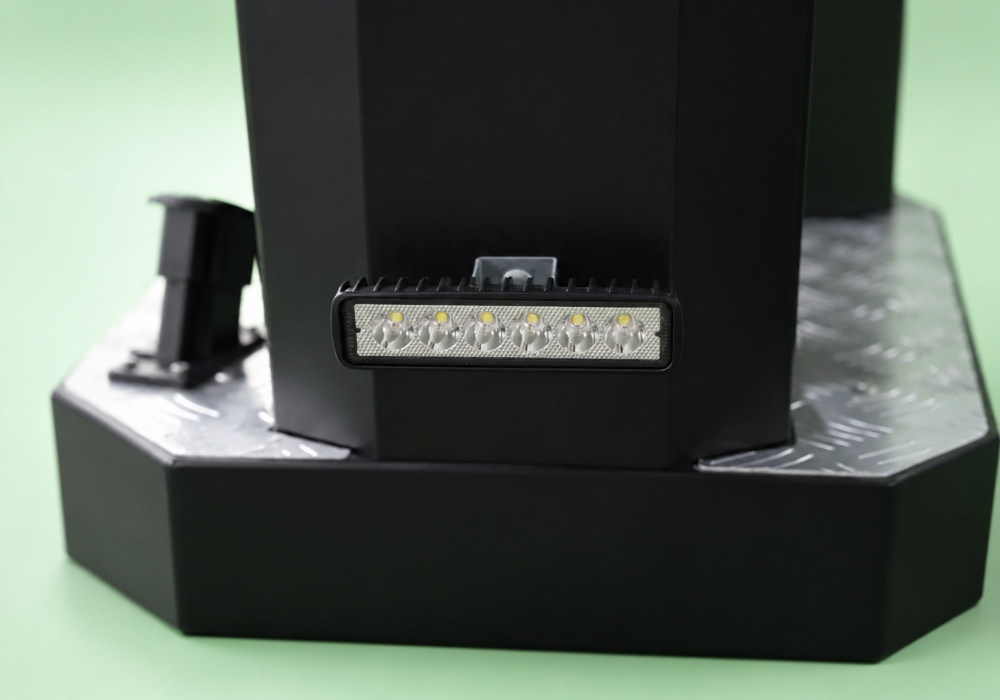
The LT-S2050S industrial floor sweeper is a heavy-duty cleaning machine engineered for 50,000-square-meter manufacturing facilities, featuring a 2,050 mm cleaning path, an 18,000 square meter hourly output, and a 240-liter hydraulic hopper designed to reduce facility sanitation labor overhead by 65 percent.
Heavy manufacturing plants operating across 75,000 square meters face constant debris accumulation from metal machining and material handling operations.
Accumulated industrial waste generates airborne dust particles that settle on precision assembly lines and trigger unexpected mechanical failures in 12 percent of factory robotics.
Precision equipment reliability drops significantly when particulate matter exceeds ISO 14644 cleanliness standards in continuous three-shift production environments.
ISO 14644 compliance requires specialized dust containment systems capable of capturing microscopic debris before secondary circulation occurs inside enclosed production bays.
Advanced nanofiber filtration matrices installed in modern cleaning units capture 99.9 percent of airborne particles measuring down to 0.3 microns.
Capturing sub-micron particles prevents respiratory hazards for floor operators while maintaining strict indoor air quality thresholds established by OSHA in 2024.
Occupational Safety and Health Administration guidelines mandate particulate suppression systems on all heavy industrial cleaning equipment operating indoors.
Heavy-duty industrial floor sweeper units utilize dual vacuum impellers to pull ambient air through multi-stage pleated filters during active sweeping cycles.
| Technical Parameter | Specification Metric | Operational Impact |
| Sweeping Path | 2,050 mm | Covers 18,000 square meters per hour |
| Battery Capacity | 48V Lithium-ion | Delivers 8 hours of continuous runtime |
| Hopper Volume | 240 Liters | Elevates debris to 1.5 meters for dumping |
| Maximum Grade | 30 Percent | Climbs multi-level facility loading ramps |
Operating across steep facility ramps requires high-torque drive motors capable of maintaining consistent brush rotation speeds without losing traction.
Dual rear-wheel electric motors deliver 30 percent gradeability to navigate multi-level automotive manufacturing complexes and elevated loading docks.
Navigating tight corners inside narrow warehouse aisles demands responsive steering geometry and compact turning radiuses for industrial cleaning operators.
Compact chassis designs allow operators to execute 180-degree turns within 2.4-meter warehouse aisles without clipping pallet rack uprights.
Pallet rack impacts cost distribution centers an average of 4,500 dollars per incident in structural repairs and inventory damage replacement costs.
Facility managers deploy ride-on cleaning equipment to eliminate manual broom sweeping and reduce pedestrian traffic hazards in forklift zones.
Forklift operators rely on clear sightlines and audible reverse alarms to prevent collisions with maintenance personnel working in shared logistics lanes.
Panoramic glass cabins equipped with 360-degree high-definition cameras eliminate blind spots during heavy-duty warehouse sanitation shifts.
High-definition camera feeds display directly onto dashboard monitors, allowing operators to monitor side-brush contact points and rear clearance zones simultaneously.
Dashboard-mounted CAN-bus touchscreens display real-time battery voltage, brush wear indicators, and filter cleaning intervals during active operation.
Real-time diagnostic monitoring helps maintenance teams schedule preventive service intervals before component wear causes unexpected operational downtime.
Preventive maintenance schedules reduce unexpected mechanical failures by 42 percent across large commercial vehicle fleets and industrial machinery.
Lithium battery technology further minimizes routine upkeep by eliminating water refilling tasks associated with traditional flooded lead-acid power systems.
Maintenance-free lithium battery packs support opportunity charging during 15-minute shift change breaks without degrading overall cell longevity.
Cell degradation tests conducted over 1,500 charge cycles demonstrate that modern lithium chemistries retain 80 percent of their original energy storage capacity.
Energy retention directly correlates with consistent suction power and brush rotation speeds throughout the final hours of an eight-hour shift.
Consistent operational performance allows a single industrial floor sweeper to replace manual crews consisting of six sanitation workers.
Replacing manual cleaning labor with automated ride-on machinery reduces total annual facility sanitation expenditures by 55 percent.